

Summary Table
| Feature | Best Options | What to Avoid |
| Material | Polypropylene, Nylon, Washable Cotton, Bamboo | Wool, Silk, High-pile Shag |
| Backing | Rubber, Latex (Non-slip is vital) | No backing (slippery) |
| Texture | Flatweave, Low-pile | Fluffy, Deep-pile |
| Placement | In front of the sink, stove, or alongside the island | Too close to open flames |
| Benefits | Comfort, floor protection, noise reduction | Traps crumbs, absorbs smells |
| Cleaning | Machine washable, scrubbable | Dry clean only |
The Kitchen Rug Debate
For many years, the idea of placing a rug in the kitchen was controversial. The kitchen is the workhorse of the home. It is where sauce splashes, water spills, and crumbs fall. Traditionally, people preferred bare floors like tile, stone, or hardwood because they are easy to wipe down.
However, design trends have shifted. The kitchen is no longer just a place for cooking; it is the heart of the home where we entertain and gather. As a result, homeowners want the space to feel cosier and more inviting. A rug is one of the quickest ways to soften the hard edges of a kitchen.
The question isn’t really “can” you put a rug in the kitchen, but rather “which” rug should you put there. With modern materials and washable designs, a kitchen rug is not only possible but practical.
This guide will walk you through exactly how to choose a rug that survives the chaos of daily cooking while looking brilliant.
Why You Should Consider a Kitchen Rug
There are compelling reasons to add soft furnishing to your kitchen floor. It serves both functional and aesthetic purposes.
1. Comfort Underfoot
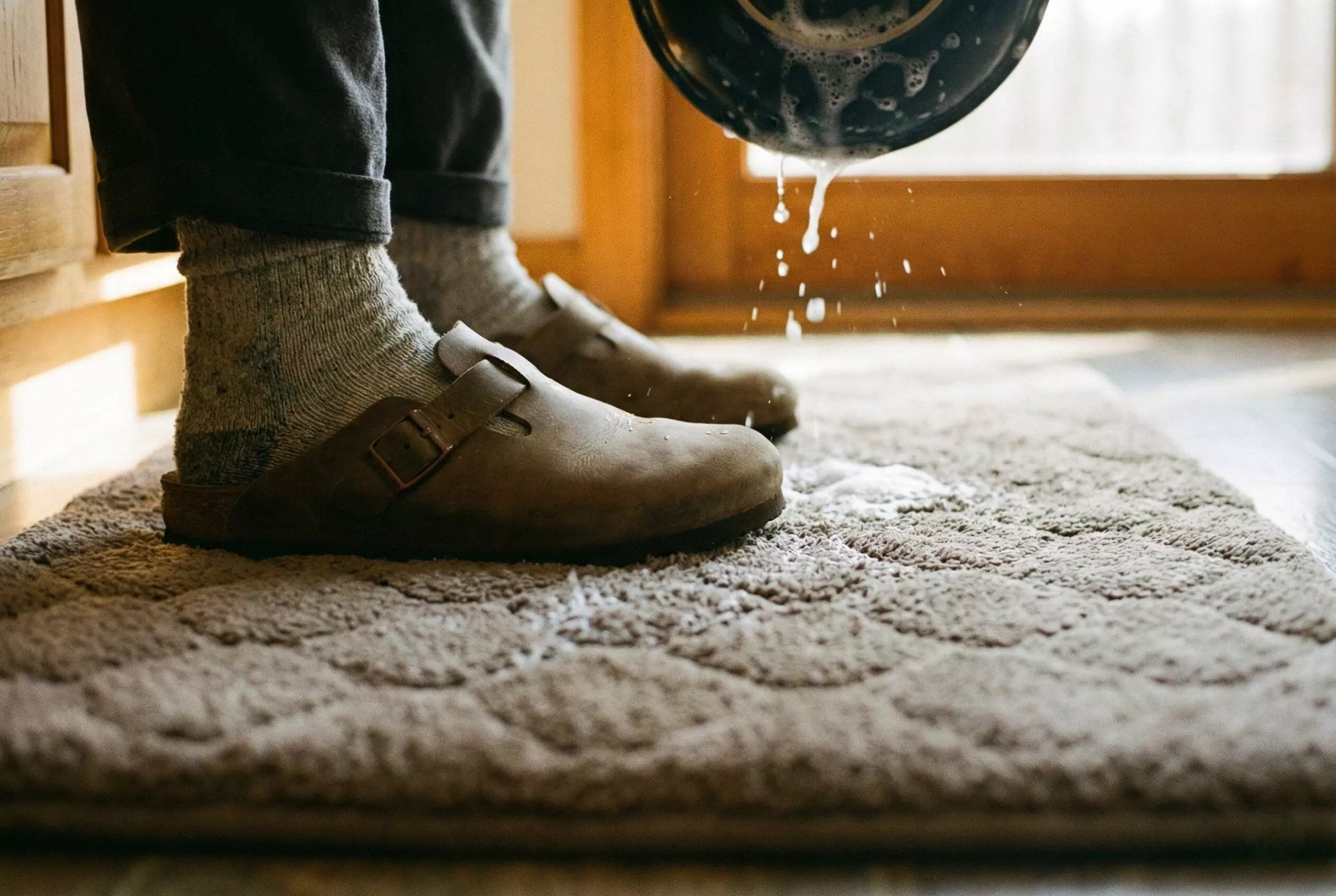
Cooking often involves standing in one spot for long periods, such as chopping vegetables at the island or washing dishes at the sink. Standing on hard tiles or stone can be tough on your back, knees, and feet. A rug provides a layer of cushioning that reduces fatigue.
2. Floor Protection
Kitchen floors take a beating. Dropped pots, sharp knives, and heavy foot traffic can scratch wood or crack tiles. A strategically placed rug acts as a shield, protecting your expensive flooring from dents and scratches.
3. Noise Reduction
Kitchens are full of hard surfaces, granite worktops, stainless steel appliances, and tiled floors. These surfaces reflect sound, making the room noisy and echoey. A rug helps absorb sound, making the kitchen quieter and more pleasant, especially during busy family meals.
4. Design and Warmth
Kitchens can sometimes feel sterile or “cold” due to all the metal and stone. A rug introduces texture, colour, and pattern. It is an easy way to inject personality into the room without a full renovation.
The Risks and Challenges
Before buying a rug, you must be realistic about the environment it is entering.
- Spills and Stains: From red wine to olive oil, liquids will land on the floor. If your rug absorbs these instantly, it will be ruined.
- Tripping Hazards: In a busy kitchen where you are carrying hot pans or sharp knives, a curled rug corner is dangerous.
- Hygiene: Rugs can trap crumbs and moisture, which may lead to bacteria or mould if not cleaned regularly.
Choosing the Right Material
This is the most critical factor. The success of a kitchen rug depends entirely on what it is made of. You need materials that are tough and water-resistant.
Best Materials for Kitchens
- Polypropylene (Olefin): This is the gold standard for kitchen rugs. It is a synthetic fibre that is stain-resistant, waterproof, and fade-resistant. You can often scrub these rugs with bleach solutions, and they are very affordable.
- Nylon: Similar to polypropylene, nylon is very durable and easy to clean. It stands up well to heavy foot traffic.
- Cotton (Flatweave): Cotton is absorbent, which can be a downside, but it is often machine washable. If you buy a small cotton runner, you can simply throw it in the washing machine when it gets dirty.
- Bamboo or Seagrass: Natural fibres like bamboo are durable and add a nice organic texture. They are hard, so they don’t offer much cushioning, but they are easy to sweep.
Materials to Avoid
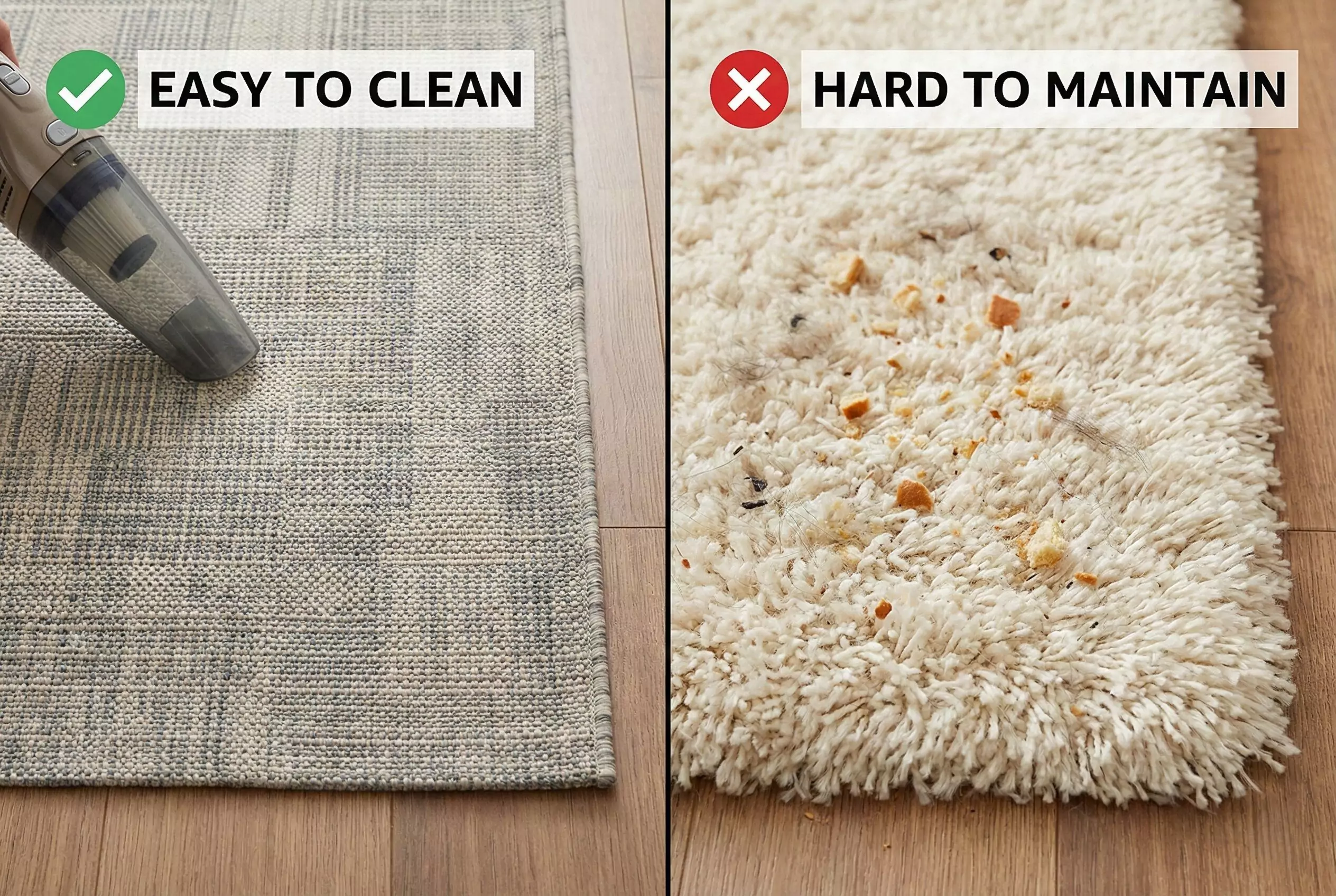
- Wool: Wool is porous and absorbs stains instantly. It is also expensive and difficult to clean.
- Silk or Viscose: These are too delicate for a high-traffic, wet environment.
- High-Pile or Shag Rugs: These will trap crumbs, dust, and pet hair deep in the fibres. They are almost impossible to keep clean in a kitchen.
Selecting the Correct Size and Shape
The shape of your kitchen dictates the shape of your rug. You want the rug to define the space without covering the entire floor.
Runners
Runners are long, narrow rugs. They are the most popular choice for kitchens, especially in galley layouts (long, narrow kitchens) or between an island and the main counter. A runner draws the eye through the room, making it look longer.
Small Mats
Small rectangular or semi-circle mats are perfect for “task areas.” Place one directly in front of the sink or the stove. These are strictly for comfort and floor protection in high-use spots.
Large Area Rugs
If you have a large, open-plan kitchen with a dining table in the centre, a large area rug can sit under the table. However, ensure the rug is large enough that the chairs remain on the rug even when pulled out.
Sizing Rules
- Leave a Border: Always leave at least 15 to 20 cm of bare floor between the edge of the rug and the cabinets. This prevents the rug from looking cramped and makes cleaning the edges easier.
- Measure Twice: Use masking tape on the floor to outline where you want the rug to go before you buy it. This helps you visualise the size.
Safety First: Non-Slip is Non-Negotiable
Safety is paramount in a kitchen. You cannot have a rug that slides around when you step on it.
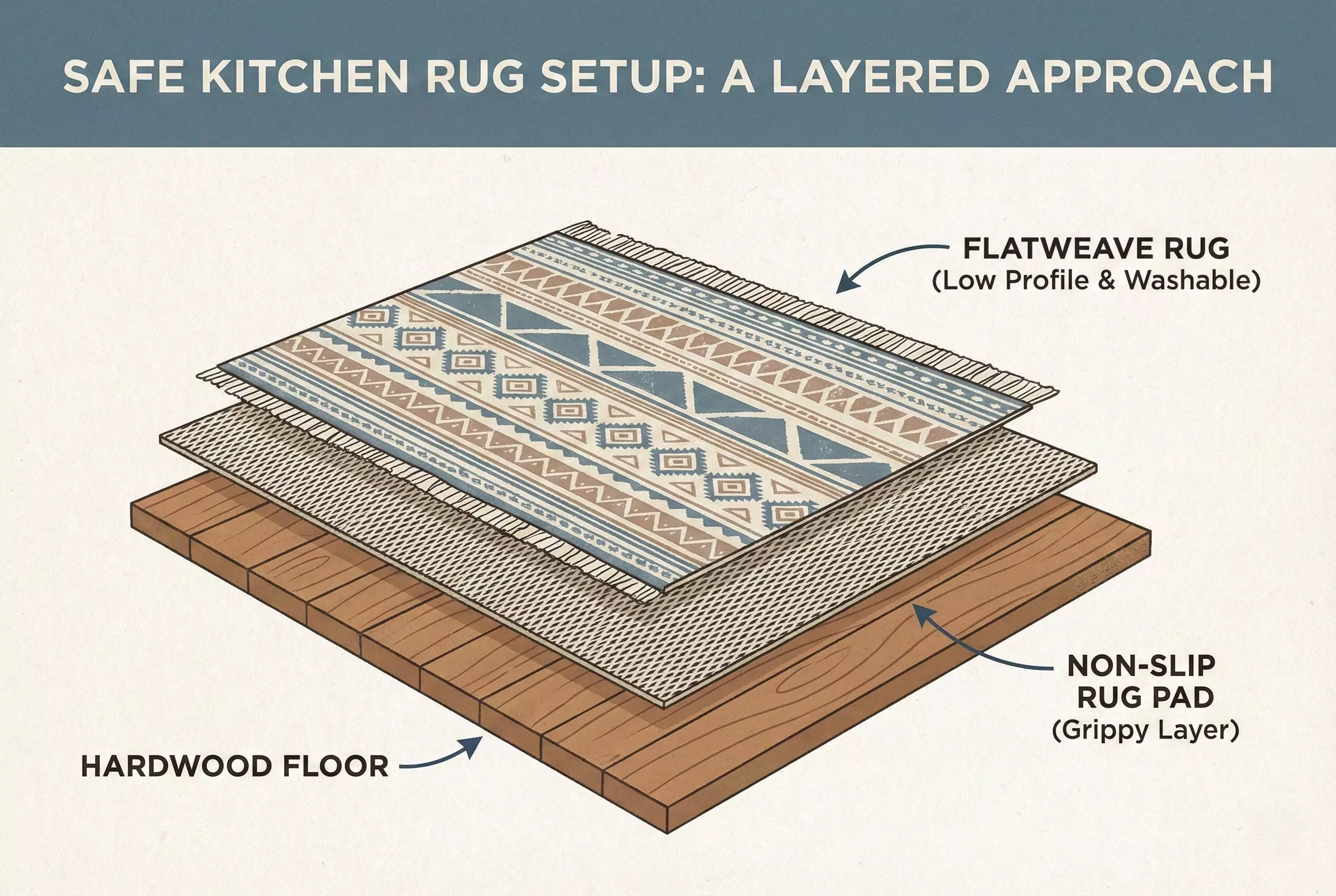
- Rubber Backing: Look for rugs that come with a rubber or latex backing built-in. These grip the floor effectively.
- Rug Pads: If your chosen rug does not have a non-slip back, you must buy a high-quality rug pad to go underneath. A rug pad also adds extra cushioning and prevents the rug from bunching up.
- Rug Tape: For corners that curl up, use double-sided rug tape or rug grippers to keep them flat against the floor.
Cleaning and Maintenance
If you put a rug in the kitchen, you must be prepared to clean it. Here is a routine to keep it fresh.
Daily/Weekly
- Shake it out: Take small rugs outside and give them a vigorous shake to remove loose crumbs and dust.
- Vacuum: Use a vacuum cleaner on a low setting. Avoid using the beater bar (the spinning brush) on woven rugs as it can pull the threads.
Dealing with Spills
- Act fast: The longer a spill sits, the harder it is to remove.
- Blot, don’t rub: Use a clean paper towel or cloth to blot the liquid up. Rubbing pushes the stain deeper into the fibres.
- Spot clean: Use a mild detergent and water for most synthetic rugs.
Deep Cleaning
- Machine Wash: If your rug is labelled “machine washable,” wash it on a cold cycle and air dry it. Do not put rugs with rubber backings in the tumble dryer, as the heat can melt or crumble the rubber.
- Hose it down: For indoor/outdoor polypropylene rugs, you can take them into the garden and hose them down with soapy water.
Styling Your Kitchen Rug
Now for the fun part: making it look good. The rug can be the focal point of the room or a subtle background element.
Colour Coordination
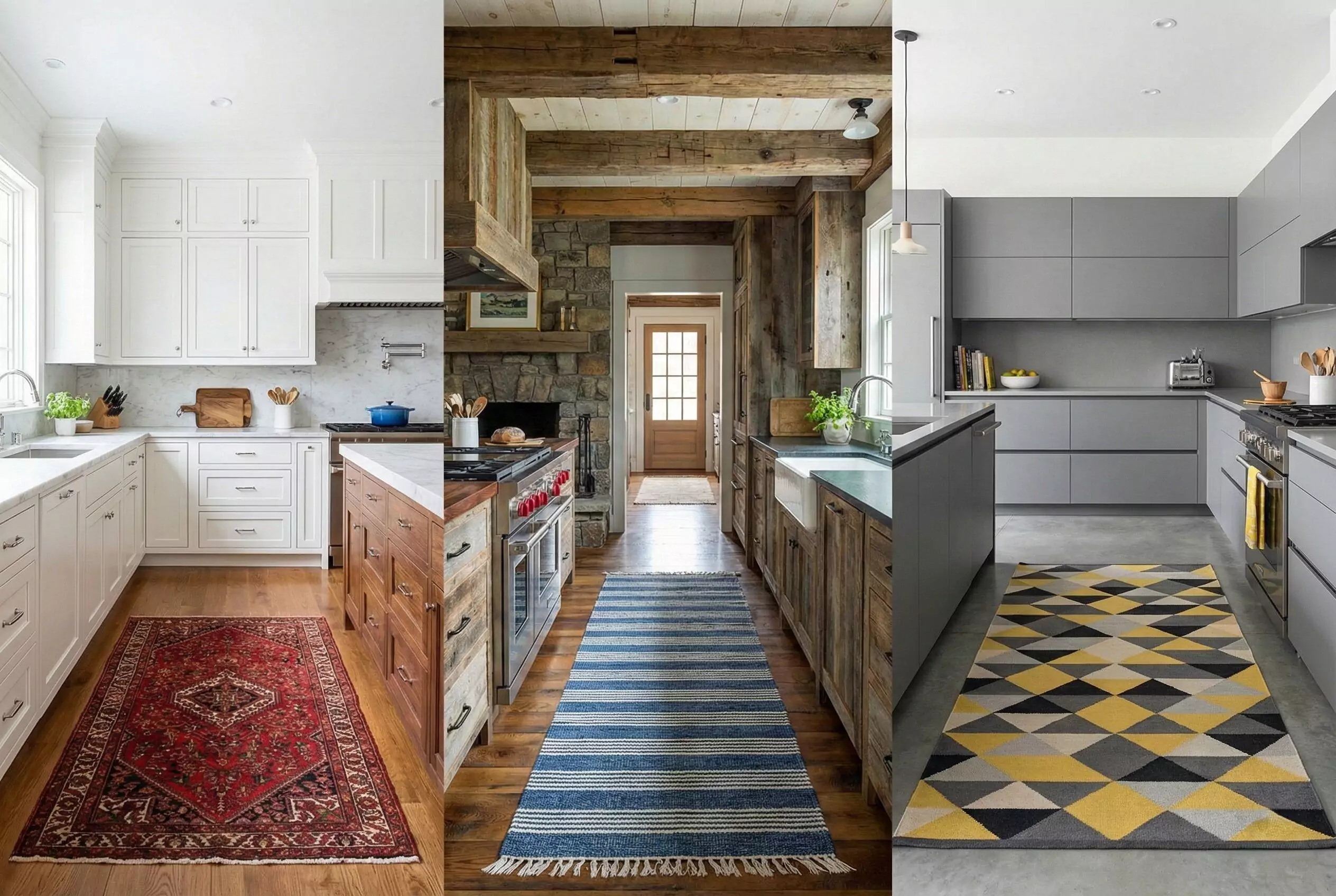
- Neutral Kitchens: If you have white cabinets and grey floors, a rug is the perfect place to add a bold colour like deep red, navy blue, or mustard yellow.
- Busy Kitchens: If your kitchen already has colourful tiles or a busy backsplash, choose a rug in a solid, neutral colour to calm the space down.
- Darker is Better: In a kitchen, darker colours or busy patterns are your friends. A white or cream rug will show every speck of dirt. A patterned rug (like a Persian style or geometric print) hides stains and crumbs remarkably well.
Pattern Play
- Stripes: Classic and tidy. Stripes look great in modern and coastal kitchens.
- Oriental/Vintage: These intricate patterns are excellent at hiding messes and add a touch of elegance to traditional or farmhouse kitchens.
- Geometric: Adds a contemporary, sharp look.
Where Exactly to Place It?
Placement is key to functionality.
The Sink Area
This is the most common spot. We spend a lot of time at the sink washing vegetables and dishes. A small, cushioned mat here is a back-saver. Ensure it is centred with the tap for a symmetrical look.
The Gap (Island vs. Counter)
If you have an island, the walkway between the island and the main cabinets is a high-traffic zone. A runner rug fits perfectly here. It visually connects the two spaces and protects the floor where you walk the most.
The Entryway
If your kitchen has a door leading to the garden or patio, place a durable doormat or small rug there to trap dirt before it gets tracked across the kitchen floor.
Conclusion
So, can you put a rug in the kitchen? Absolutely. In fact, most designers recommend it. A kitchen without a rug can feel hard, loud, and unfinished. A kitchen with a rug feels curated, warm, and lived-in.
The secret to success lies in the selection. Do not simply move an old bedroom rug into the kitchen. Invest in a rug specifically designed for the environment, one that is flatweave, synthetic, or washable, and always ensure it is secured with a non-slip pad.
If you follow these guidelines, your kitchen rug will be a stylish and functional addition that protects your floor and your feet for years to come.
