
Summary Table: Guide to Starting Rug Collection
| Category | Key Details |
| Best Materials | Wool (durable, cleans well), Silk (luxury, delicate), Cotton (affordable, flatweaves). |
| Construction Types | Hand-knotted (investment quality), Hand-tufted (mid-range), Flatweave (durable, no pile). |
| Important Metrics | KPSI (Knots Per Square Inch), Age (Antique = 100+ years, Vintage = 20-99 years). |
| Top Starter Styles | Heriz (durable geometric), Kilim (flatweave), Gabbeh (modern/tribal), Oushak (soft colours). |
| Care Tips | Rotate every 6 months, vacuum without beater bar, professional clean every 3-5 years. |
| Where to Buy | Reputable local dealers, estate auctions, specialised online retailers. |
A Beginner’s Guide to Starting a Rug Collection
Collecting rugs is more than just decorating a floor. It is an investment in art, history, and culture. A well-chosen rug can last for generations, retain its value, and completely transform the feeling of a room. However, the world of antique and oriental rugs can be intimidating.
This guide breaks down everything a beginner needs to know to buy with confidence, spot quality, and build a collection that reflects their personal style.
Why Collect Rugs?
Unlike mass-produced furniture that loses value the moment it leaves the shop, high-quality handmade rugs often appreciate over time. They are durable works of art. A hand-knotted rug involves months or even years of labour by a skilled artisan. When you buy a rug, you are buying a piece of history.
Understanding Rug Construction
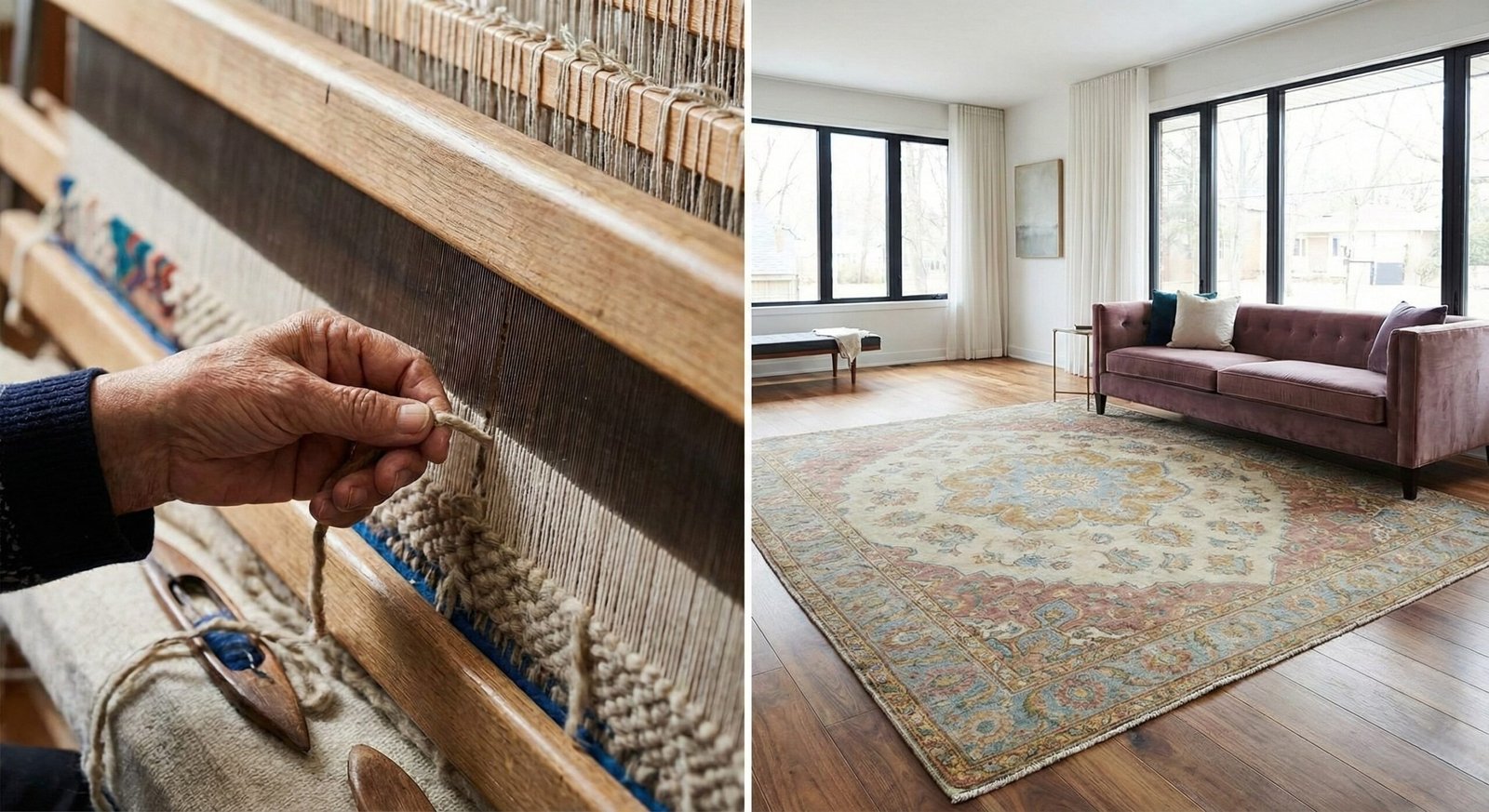
Before you spend a penny, it’s essential to understand how rugs are made. The construction determines the price, durability, and collectibility.
Hand-Knotted
This is the gold standard for collectors. An artisan ties individual knots onto a vertical warp foundation.
- Why buy it: It lasts the longest (50-100+ years) and holds value best.
- How to spot it: Flip the rug over. The pattern on the back should look exactly like the front. The fringe is part of the rug’s structure, not sewn on later.
Hand-Tufted
A tufted rug is made by punching wool strands into a canvas backing using a handheld tool. A backing cloth is then glued to the back to hold the fibres in place.
- Why buy it: It is cheaper and faster to produce.
- The downside: The glue eventually dries out and crumbles. These are not considered investment pieces.
Flatweave (Kilim, Dhurrie, Soumak)
These rugs have no pile. They are woven on a loom rather than knotted.
- Why buy it: They are reversible, durable, and generally more affordable. They work great in kitchens or high-traffic areas.
Machine-Made
These are produced by power looms using synthetic materials or wool.
- Collector’s Note: Generally, collectors avoid these. They are strictly for decorative purposes and have no resale value.
The Holy Grail of Materials
The fibre used in a rug affects how it feels, how it looks, and how long it lasts.
Wool
Wool is the most common and practical material for rugs.
- Pros: It is naturally stain-resistant, fire-retardant, and extremely durable. It has a soft handle (feel).
- Tip: Look for “hand-spun” wool. It absorbs dye unevenly, creating beautiful colour variations known as abrash.
Silk
Silk is used for luxury rugs with intricate details.
- Pros: It has a natural sheen and allows for extremely high knot counts.
- Cons: It is delicate and expensive. Avoid using silk rugs in high-traffic areas like hallways.
Cotton
Cotton is mostly used for the foundation (warp and weft) of the rug, but sometimes for the pile in flatweaves.
- Pros: Inexpensive and sturdy.
- Cons: It attracts dirt more easily than wool and doesn’t have the same lustrous finish.
Artificial Silk (Viscose/Rayon)
- Warning: Sellers may call this “bamboo silk” or “art silk.” It is a chemically processed fibre. It stains easily (even with water) and wears out quickly. Avoid this for a serious collection.
Decoding Rug Styles and Origins
Rugs are usually named after the city, village, or tribe that created them. Understanding these names helps you know what aesthetic to expect.
City Rugs (e.g., Tabriz, Kashan, Nain)
These are woven in urban workshops. They follow strict design maps drawn by master weavers.
- Look: Formal, intricate, floral, and curvilinear designs. High knot counts.
- Best for: Formal sitting rooms and dining rooms.
Village and Tribal Rugs (e.g., Heriz, Hamadan, Baluch)
These are woven by families or nomadic tribes, often without a paper map.
- Look: Geometric, bold, and angular patterns. They often use fewer knots but have more character.
- Best for: Snugs, libraries, and eclectic modern spaces.
- Top Pick for Beginners: The Heriz rug is famous for being incredibly durable and having a pleasing geometric style that fits almost any decor.
Modern Tribal (e.g., Gabbeh)
Gabbeh rugs come from Southwest Iran.
- Look: Thick pile, very simple abstract designs, and large fields of open colour.
- Best for: Minimalist and contemporary homes.
How to Evaluate Quality
When you are looking at a potential purchase, use this checklist to ensure you aren’t getting ripped off.
- Check the Knots Per Square Inch (KPSI): While a higher knot count usually means a finer rug, it doesn’t always mean a “better” rug. A tribal rug with 80 KPSI can be just as valuable as a city rug with 300 KPSI if the artistry is superior. However, for city rugs (like Isfahan or Nain), higher is generally better.
- Inspect the Dyes
- Natural/Vegetable Dyes: These soften over time and create a harmonious look.
- Synthetic Dyes: These can be harsh or neon.
- The Test: Bend the rug pile open to look at the base of the knot. If the colour is significantly different at the bottom than the tip, the rug might be faded by the sun or chemically washed (painted) to look old.
- Lay it Flat: Handmade rugs are rarely perfectly straight, but they should lie relatively flat. If a rug ripples or buckles excessively, it has structural tension issues that are hard to fix.
- Check the Fringe: The fringe is the skeleton of the rug. If the fringe is unravelling, the knots will start to slide off, and the rug will lose rows of pile. Repairing fringe is expensive.
Budgeting for Your First Rug
You do not need to be a millionaire to start collecting. Here is a rough price guide for a standard 8×10 foot rug (prices vary wildly based on age and origin, but this sets expectations):
- Entry Level (£400 – £1,200): Newer production rugs from India or Pakistan, or worn vintage Turkish rugs.
- Mid-Range (£1,500 – £4,000): Good condition vintage Persian village rugs (like Hamadan or Malayer) or high-quality new Afghan rugs.
- High-End (£6,000+): Fine antique Persian city rugs (100+ years old), silk rugs, or rare tribal pieces in mint condition.
Sizing and Placement Guidelines
One of the biggest mistakes beginners make is buying a rug that is too small. A small rug makes a room look smaller and disjointed.
- Living Room: The front legs of your sofa and chairs should sit on the rug. Ideally, all furniture legs should be on the rug if the room is large enough.
- Dining Room: The rug must extend at least 24 inches (60 cm) past the table on all sides. This ensures that when a guest pulls out a chair, the back legs don’t fall off the edge of the rug.
- Bedroom: The rug should frame the bed. It should extend 18-24 inches (45-60 cm) from the sides and foot of the bed.
Where to Buy
Where you buy is just as important as what you buy.
- Rug Dealers: The safest bet. A good dealer will let you take the rug home on approval to try it in your space. They should provide a certificate of authenticity.
- Auctions: You can find incredible deals at estate auctions, but you need to know what you are looking at. There are no returns.
- Online Marketplaces: Look for sellers with 100% positive feedback and detailed photos of the rug’s back.
Sharafi & Co. is the Best Place for Authentic Rugs
Care and Maintenance
If you take care of your collection, your great-grandchildren will enjoy it.
- Padding: Always use a high-quality rug pad (underlay). It prevents slipping, provides cushion, and protects the fibres from being crushed against the hard floor.
- Vacuuming: Vacuum regularly, but never use the beater bar (the rotating brush). The brush rips out wool fibres. Use the suction-only attachment.
- Rotation: Rotate your rug 180 degrees every six months. This ensures it fades evenly from sunlight and wears evenly from foot traffic.
- Spills: Blot immediately with a white cloth. Do not rub. If it is a serious stain (wine or pet urine), take it to a professional rug cleaner who specialises in hand washing. Do not use standard carpet cleaning services; their chemicals are too harsh for natural dyes.
Conclusion
Starting a rug collection is a journey of discovery. You will learn to appreciate the irregularity of a hand-drawn line and the softness of hand-spun wool. Start small, perhaps with a durable scatter rug for an entryway. Train your eye by visiting showrooms and touching the rugs. Ask questions. The more you learn, the more you will appreciate the artistry beneath your feet.