
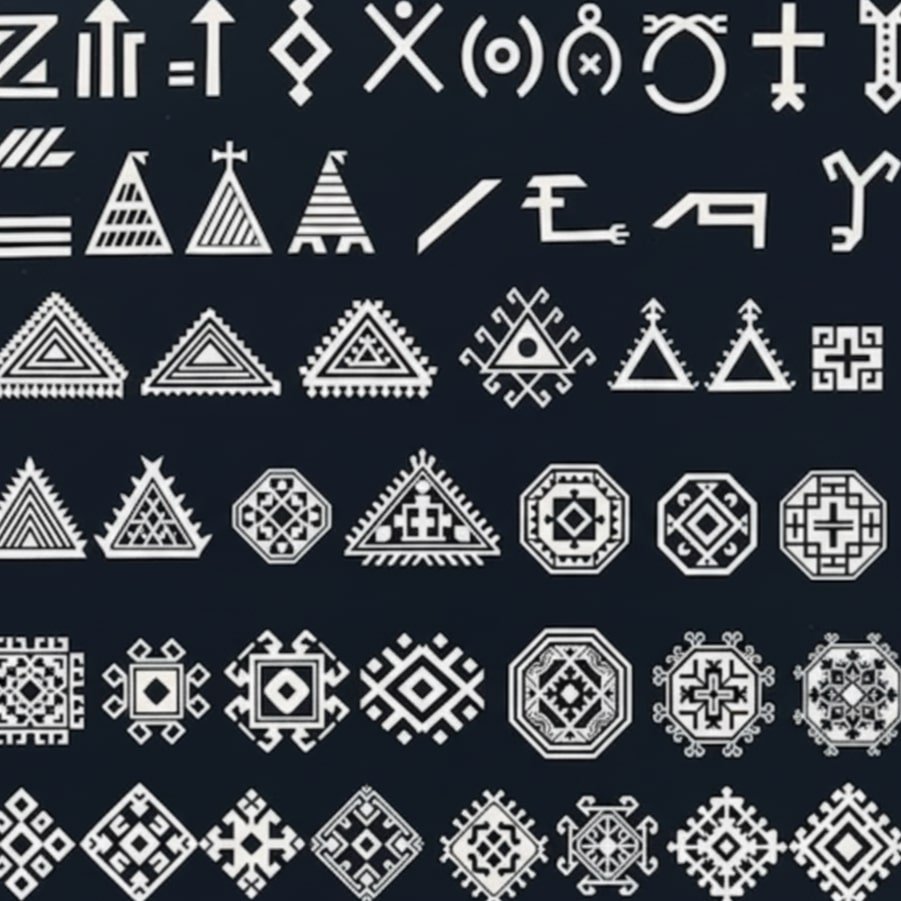
Likewise, the motifs and symbols in handmade rugs have a story to tell. Here are some common motifs and what they symbolise:
Different Kinds of Persian Rug Motifs and Their Meanings
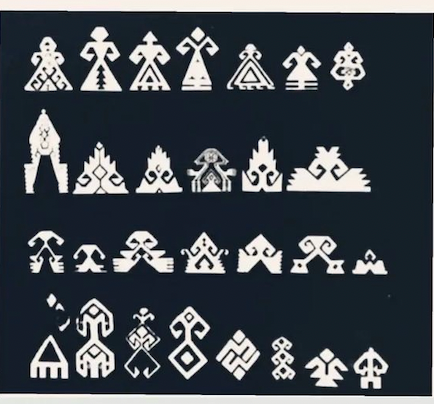
Woman with Hand Motifs
Woman with hands on their sides comes from “Mother Goddess”. It depicts a fertile woman.

Rams Horn
Rams Horn represents fertility, heroism, power and Manhood.
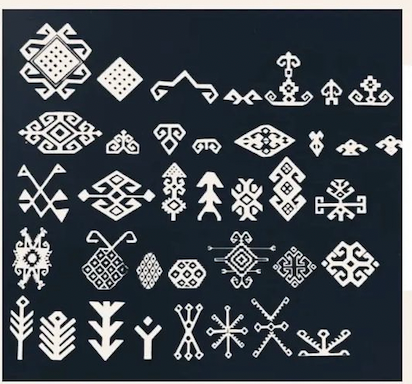
Crops Motifs
These are signs for wheat, barley, pomegranate, poppy, melon, fig, grapes, and mulberry depict fertility.

Person Motifs
The depiction of a person is to celebrate a particular person or child’s expectancy.
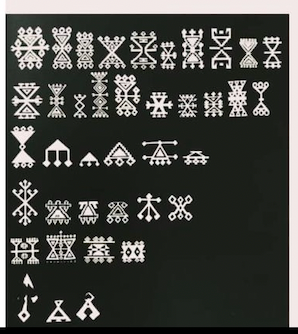
Hair Decorations
Hair decoration ornaments depict readiness or expecting to be married.
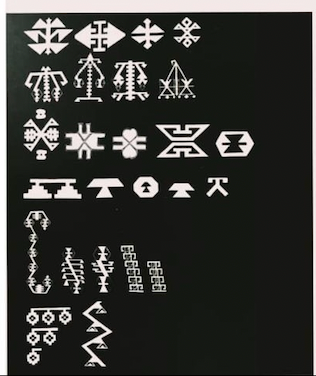
Earring Motifs
Earrings depicting waiting for marriage.

Chains Motifs
These are chains that depict family ties and devolution to your love. Gifting a rug with these motifs to a newlywed is for the longevity of marriage.
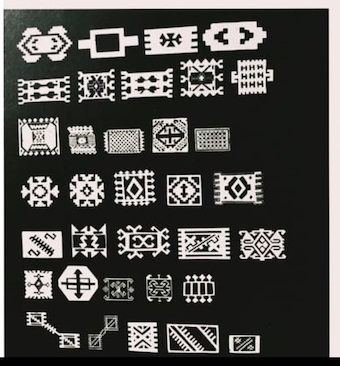
Dowry or Death
These motifs in a kilim in the bride’s dowry depict their readiness for marriage and childbearing. In some cases, it also represents death and a coffin.
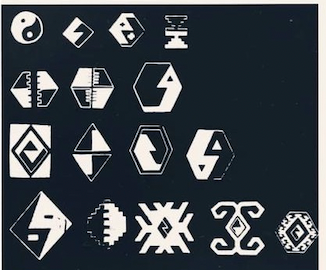
Yin and Yang Motifs
These motifs come from the Far East and are known as yin and yang and depict harmony and equality between husband and wife.
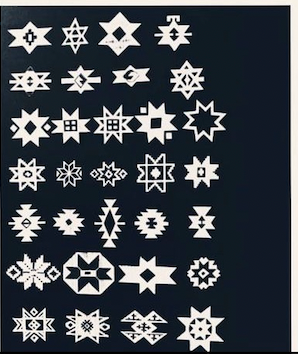
Stars Symbols
Stars were used in most carpets and kilims to show happiness and fertility. The star motif, which was usually known as Solomons’s kindness/ love, depicted the compassion of angel mothers. Eight sided stars or more were seen more in Turkish Anatolian carpets.
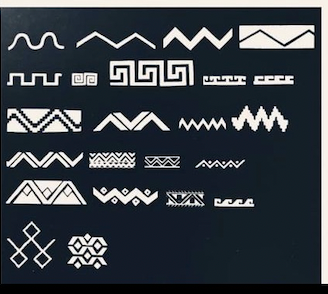
Water Motifs
This motif is derived from the importance of water in life. The cloud, vase or water vessel are all the same themes but represent water.
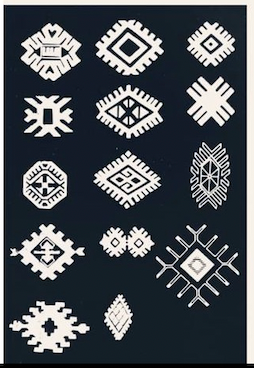
Greater Burdock
This motif is derived from the plant Greater Burdock, and it was thought it fends off the evil eye. It also represents plentifulness.
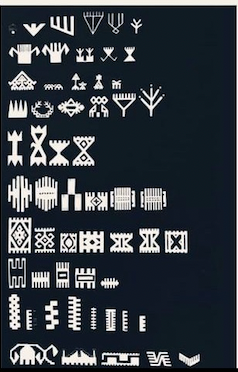
Five Lines
These motifs consist of five lines. It was believed that the number five or five fingers (hand) fend off the evil eye. On the other hand, the comb design represents protection for marriage and birth.

Kabala Symbols
Kabala or spell is usually written on a triangular frame for protection against evil.
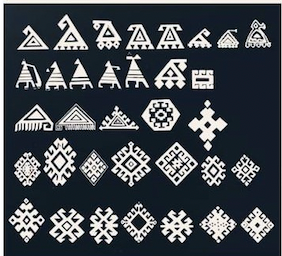
Wolf’s Jaws
These are known as the wolf’s jaws or footprints. It was believed it would give protection against wolves. Wolf attack was the main threat to the herds of nomadic people.
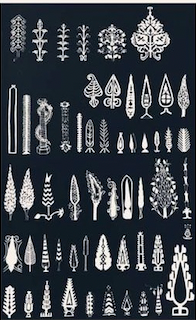
Tree Motifs
Tree of life. It represents infinite life or peace in the afterlife. The trees are derived from pine, palm, pomegranate, fig and olive trees.

Flowers Motifs
Flowers, Flowers are used in all places for decoration. Flowers like rose, carnation, tulip and hyacinth are usually used. Some of these flowers represent other things like the hyacinth represents paradise and the tulip expecting a male offspring.
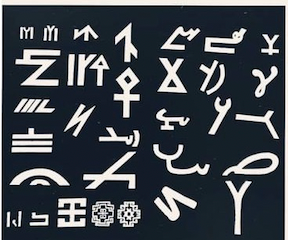
Family Motifs
Family Motifs. Some families had their symbols (code of arms) woven into kilims.
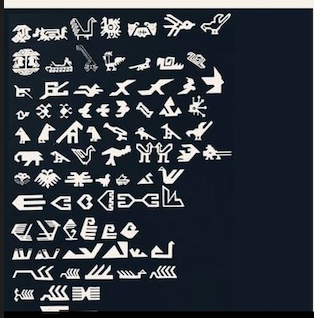
Birds Symbols
Birds. Birds represent many things, like good luck or bad luck, love, the spirit of a deceased woman, willingness, expecting news or power.
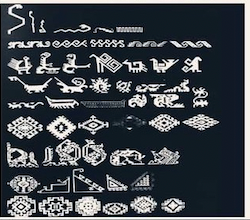
Snake Motifs
The history of the snake motif goes back to early ages. The Snake motif is for protection, but the Black Snake represents success and fertility.
The dragon is a legendary motif with a lion’s legs and a snake’s tail. It was believed dragons were the keepers of the sky, water and the cause of eclipses, along with the keeper of treasure and the tree of life. There is another story that when dragon and phoenix fly together, spring rain starts falling, which is why sometimes dragons are presented as clouds.