
Summary Table
| Method | Best For | Key Ingredients | Time Required |
| Bicarbonate of Soda | General ‘doggy’ smells & dampness | Bicarbonate of soda, vacuum | 12-24 hours |
| White Vinegar Spray | Surface odours & minor stains | White vinegar, water, spray bottle | 1-2 hours |
| Enzymatic Cleaner | Urine, faeces, vomit (bio-waste) | Commercial enzyme cleaner | 24-48 hours |
| Steam Cleaning | Deep-set dirt & dander | Steam cleaner/carpet washer | 4-6 hours (drying) |
| Sunshine & Air | Musty smells & bacteria | Outdoors, sunlight | 6-8 hours |
| Vodka Mist | Quick refreshing | Cheap vodka, essential oils (optional) | 30 minutes |
5 Methods to Get Dog Smell Out of a Rug
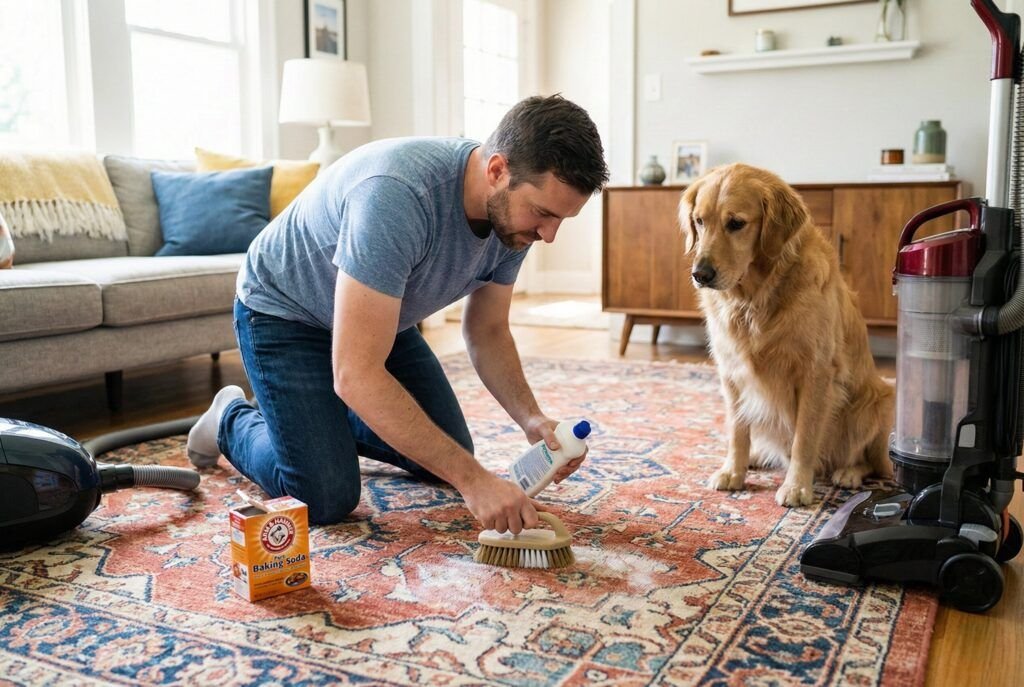
Dog owners know the struggle is real. You love your furry friend, but you do not love the lingering scent they leave on your soft furnishings.
Rugs are particularly prone to holding onto odours because their fibres act like a sponge. They trap dander, oils from your dog’s fur, dried saliva, and occasional accidents. Over time, this creates that distinct, heavy ‘dog smell’ that candles and air fresheners simply cannot cover up.
If you are looking to reclaim the freshness of your home, you do not always need to hire expensive professionals. With the right techniques and a few household staples, you can effectively neutralise odours rather than just masking them.
This guide covers everything from quick fixes for general stale smells to deep-cleaning strategies for stubborn urine accidents.
Understanding Why Your Rug Smells
Before you start cleaning, it helps to understand what you are fighting. Dog smells usually come from three main sources:
- Sebum and Oils: Dogs secrete natural oils from their skin. When they roll or sleep on the rug, these oils transfer to the fibres. Over time, bacteria break these oils down, causing a musty scent.
- Dander and Saliva: Dead skin cells and dried drool contain proteins that bacteria love to eat. As the bacteria feed, they release foul-smelling gases.
- Urine and Bio-waste: This is the most potent source. Dog urine contains uric acid crystals. If not treated correctly, these crystals bind tightly to the rug fibres and backing. Humidity can reactivate these crystals years later, bringing the smell back even when you thought it was gone.
Method 1: The Bicarbonate of Soda Technique
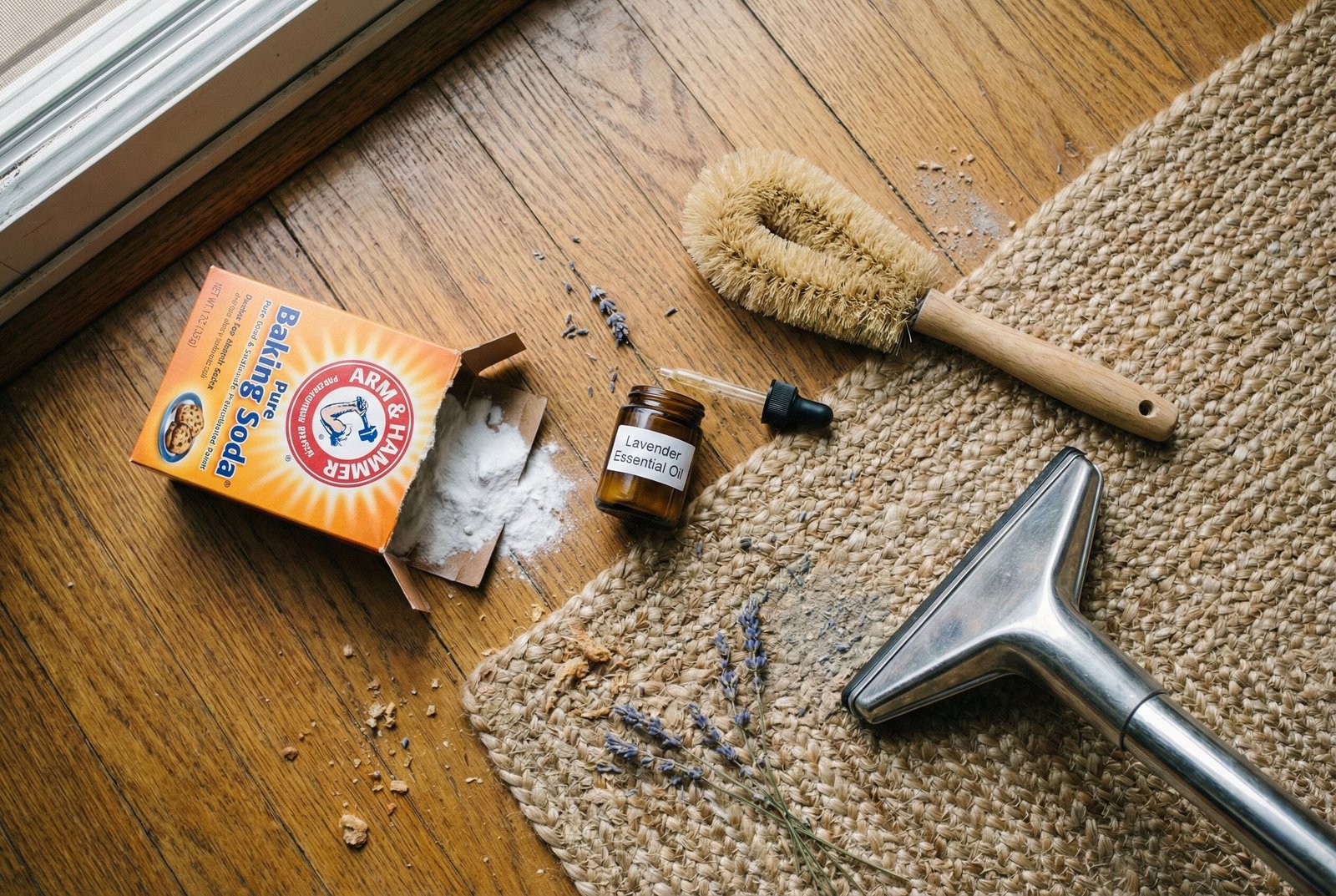
This is the safest and easiest method for general odour removal. Bicarbonate of soda (also known as baking soda) is a natural absorbent. It has a high pH, which helps neutralise acidic odours (like urine) and absorbs moisture that bacteria need to thrive.
What You Need:
- A large box of bicarbonate of soda
- A stiff bristle brush (optional)
- A powerful vacuum cleaner
Step-by-Step Instructions:
- Clear the Area: Remove furniture from the rug if possible. If the rug is large, you can do this in sections.
- Vacuum First: Go over the rug thoroughly with your vacuum to remove loose hair, dirt, and dried mud. This ensures the powder can reach the deeper fibres.
- Sprinkle Generously: Do not be shy. Coat the rug in a visible layer of bicarbonate of soda. If your rug has a high pile (long fibres), it needs more powder.
- Brush It In: Use a clean, dry brush or your hand to gently work the powder down into the fibres. You want it to sit near the base of the rug where the smells linger, not just on top.
- The Wait: This is the most critical step. Leave the powder to sit for at least 12 hours, preferably overnight. If the smell is very bad, leave it for 24 hours. Keep pets and children away during this time.
- Vacuum Again: Vacuum slowly and methodically. You will need to go over the area multiple times to get all the powder out.
Pro Tip: If you want a nice scent, you can mix 10-15 drops of dog-safe essential oil (like lavender or cedarwood) into the bicarbonate of soda before sprinkling it. Shake it up in a jar first to distribute the oil.
Method 2: White Vinegar Solution
White vinegar is an acid that works wonders against alkaline odours. It is also a mild disinfectant. While vinegar has a strong smell itself, it evaporates completely as it dries, taking the bad smells with it.
What You Need:
- Distilled white vinegar
- Water (warm, not hot)
- A spray bottle
- Clean white cloths or towels
Step-by-Step Instructions:
- Mix the Solution: Combine one part white vinegar with three parts warm water in a spray bottle.
- Test for Colour Fastness: Before spraying the whole rug, spray a tiny amount in an inconspicuous corner. Wait a few minutes and blot with a white cloth. If colour transfers to the cloth, do not use this method.
- Light Mist: Spray the solution over the rug. You want to dampen the surface, not soak it. Soaking can damage the backing of the rug or the floor underneath (especially if it is wood).
- Air Dry: Let the rug air dry completely. Open windows and doors to create a cross-breeze.
- Repeat if Needed: Once dry, give it the ‘sniff test’. If the odour persists, you can repeat the process.
Why Not Brown Vinegar?
Always use clear, distilled white vinegar. Malt vinegar or apple cider vinegar contains tannins and natural dyes that can stain a light-coloured rug.
Method 3: Enzymatic Cleaners (For Urine)
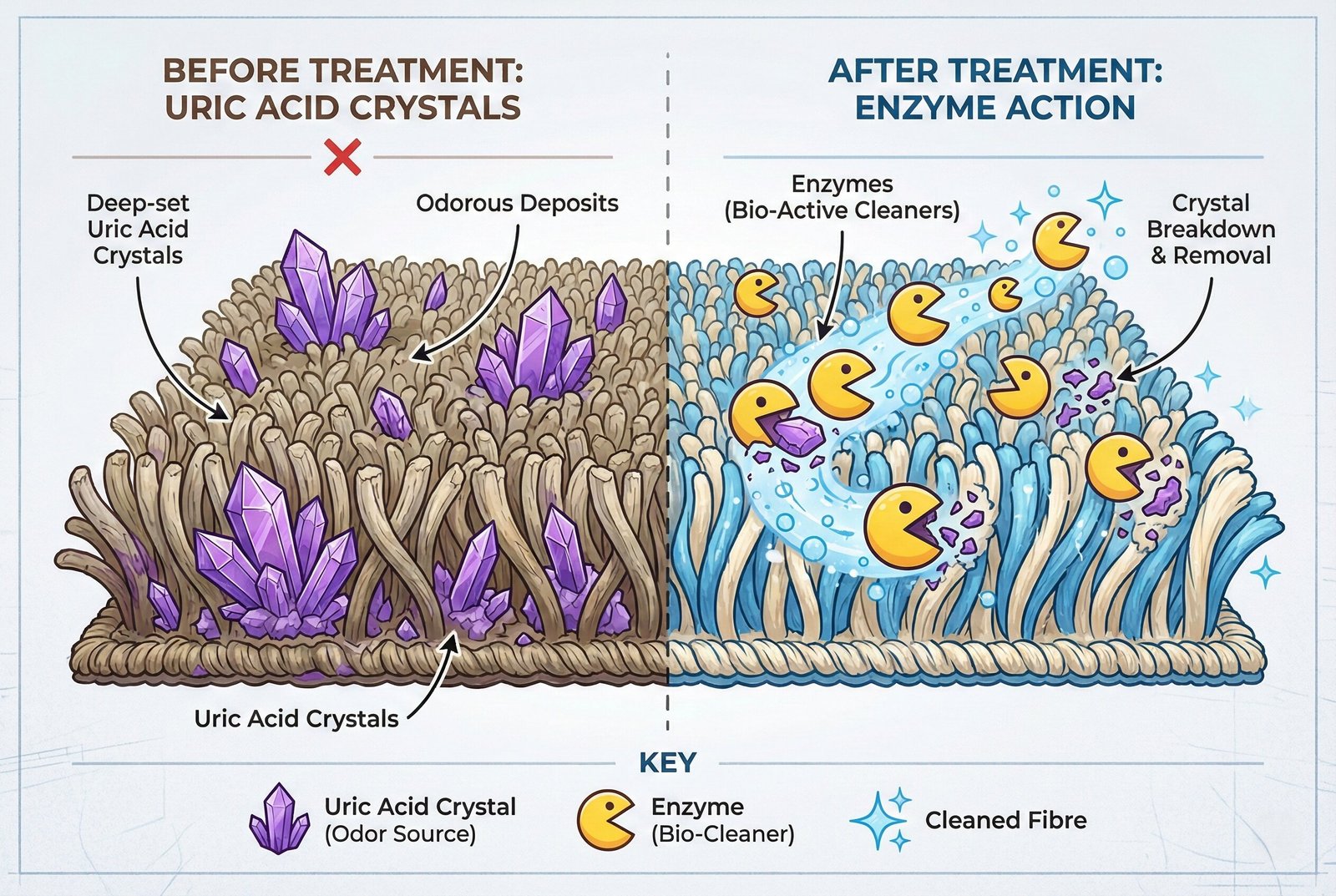
If your dog has had an accident on the rug, standard cleaners will not work permanently. You might clean the stain, but the uric acid crystals remain. To get rid of these, you need an enzymatic cleaner. These cleaners contain bio-enzymes, good bacteria, that literally eat the biological matter (urine, faeces, vomit) causing the smell.
What You Need:
- A high-quality enzymatic cleaner (available at pet shops)
- Plastic sheeting or a laundry basket (to cover the spot)
- Towels
Step-by-Step Instructions:
- Blot Fresh Accidents: If the urine is fresh, place a thick layer of paper towels or a clean cloth over it and stand on it. Absorb as much liquid as humanly possible before applying the cleaner. Do not rub; rubbing pushes the urine deeper.
- Saturate the Stain: Pour the enzymatic cleaner directly onto the spot. You need to use enough so that it soaks as deep as the urine did—this includes the underlay of the rug.
- Let It Sit: Enzymes need time to work. Check the bottle instructions, but generally, you should leave it for 15-20 minutes.
- Blot Excess: Blot up the excess liquid with clean towels.
- Cover and Wait: This is the secret step. Place a damp towel over the spot and put a heavy object (like a laundry basket with a weight inside) on top. This keeps the area moist, which allows the enzymes to keep living and eating the bacteria for longer. Leave this for 24 hours.
- Air Dry: Remove the cover and let it dry naturally. The smell might get worse before it gets better. This is normal as the enzymes break down the waste.
Method 4: The Power of Sunshine (UV Light)
Ultraviolet (UV) rays from the sun are a powerful natural sanitiser. They kill bacteria and mould spores that cause smells. This method is free and very effective for musty, damp rugs.
Step-by-Step Instructions:
- Check the Weather: Ensure there is no rain forecast. You need a bright, dry day.
- Elevate the Rug: Ideally, drape the rug over a washing line, a sturdy fence, or clean patio chairs. Air needs to circulate around both sides of the rug.
- Beat the Rug: Use a broom handle or a traditional rug beater to whack the rug. This dislodges deep dust and hair that a vacuum might miss.
- Sunbathe: Leave the rug in direct sunlight for 3 to 5 hours.
- Flip It: Turn the rug over to expose the backing to the sun for another hour or two.
Warning for Antique Rugs: If you have a very valuable antique or Persian rug, prolonged exposure to direct sunlight can fade the dyes. In this case, keep the sun exposure limited to the backing only, or place the rug in a shaded, breezy area outdoors.
Method 5: Steam Cleaning (Hot Water Extraction)
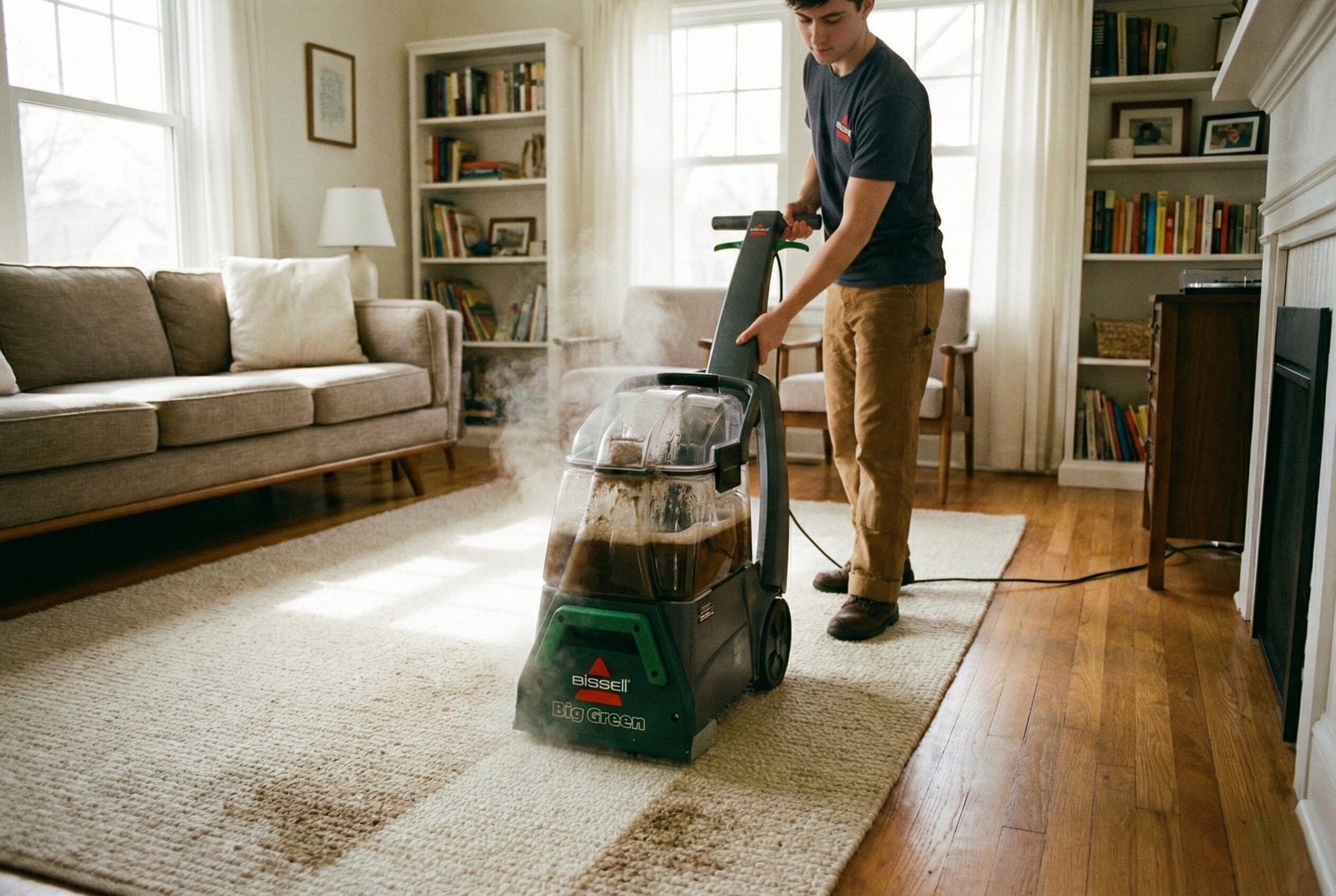
For a rug that is heavily soiled or hasn’t been deep cleaned in years, surface treatments might not be enough. Steam cleaners inject hot water and cleaning solution into the fibres and then immediately suck it back out along with the dirt.
Renting vs. Buying:
You can rent commercial-grade carpet cleaners from many supermarkets or hardware stores. If you have multiple dogs, buying a home unit might be a better investment.
Step-by-Step Instructions:
- Vacuum Thoroughly: Never skip this. Wet hair creates a muddy mess and clogs the machine.
- Pre-treat Stains: Spray any visible dark spots with a pre-treatment spray 10 minutes before starting.
- Use the Right Solution: Use a carpet shampoo specifically designed for pet odours. Do not use laundry detergent, as it foams too much and leaves a sticky residue that attracts more dirt.
- Do Not Over-wet: Make one pass pressing the trigger to release water, followed by two or three slow passes without the trigger to suck the water up. Leaving the rug too wet can cause mould and mildew smells, which are just as bad as dog smells.
- Dry Fast: Use fans or a dehumidifier to help the rug dry as quickly as possible.
Important Note on Urine: Do not steam clean a rug if there is dried urine that hasn’t been treated with an enzyme cleaner first. The heat from the steam can bond the proteins of the urine to the fibres permanently, making the smell impossible to remove. Always use enzymes first.
Dealing with Different Rug Materials
Not all rugs are created equal. The material determines how aggressive you can be with cleaning.
1. Synthetic Rugs (Nylon, Polyester, Olefin)
These are the most durable and easiest to clean. They resist staining and can handle moisture well.
- Cleaning: You can use enzymatic cleaners, vinegar, and steam cleaners safely.
- Caution: Avoid using bleach, even on white rugs, as it can yellow the fibres.
2. Wool Rugs
Wool is a natural fibre that is porous and sensitive to pH levels.
- Cleaning: Use cool water. Hot water can shrink the wool. When using vinegar, dilute it more (1 part vinegar to 5 parts water).
- Caution: Excessive scrubbing can cause ‘felting’, where the fibres mat together. Be gentle. Avoid harsh chemical cleaners; look for the ‘Wool Safe’ logo on products.
3. Jute, Sisal, and Seagrass
These natural plant fibres are very absorbent and hate water.
- Cleaning: Never steam clean or saturate these rugs. They will warp, shrink, and may even rot.
- Best Method: Stick to the dry Bicarbonate of Soda method. If you must spot clean, use very little liquid and dry it immediately with a hair dryer on a cool setting.
How to Clean the Floor Underneath
Sometimes, the smell isn’t in the rug, it’s in the floor below. If urine has soaked through the rug backing, it may have seeped into your hardwood or laminate flooring.
- Roll up the rug.
- Clean the floor with an enzyme cleaner safe for hard floors.
- Let it dry completely before putting the rug back.
- If the underlay (pad) has been soaked with urine, throw it away. You cannot effectively clean a foam underlay; it acts like a sponge for smells. Buying a new underlay is cheap and effective.
Preventing Future Odours
Prevention is always easier than the cure. Incorporating these habits into your routine will keep your rugs smelling fresher for longer.
Wipe Paws at the Door
Keep a towel or a pack of dog wipes by the back door. Wiping your dog’s paws after every walk prevents mud, outdoor bacteria, and moisture from being tracked onto the rug.
Regular Grooming
The less loose hair and dander on your dog, the less that ends up on your floor. Brush your dog regularly, ideally outdoors. Bathe your dog when they smell, but not so often that you strip their natural oils (which can actually make them produce more smelly oil to compensate).
Vacuum Schedule
Vacuum high-traffic rugs at least twice a week. Use a vacuum with a HEPA filter if possible, which traps microscopic dander particles rather than blowing them back into the air.
Washable Rugs
If you have a puppy or an elderly dog prone to accidents, consider switching to machine-washable rugs. These are usually thinner but can be thrown in the washing machine whenever they get smelly.
Common Mistakes to Avoid
When panic sets in after a messy accident, many owners make mistakes that make the situation worse.
- Scrubbing: Never scrub a stain. It damages the pile (the upright fibres) and makes the rug look fuzzy and worn. always blot.
- Using Ammonia: Never use cleaning products containing ammonia to clean pet urine. Urine contains ammonia. If you clean with it, the scent may actually encourage your dog to mark the same spot again because it smells like a ‘toilet area’ to them.
- Using Heat on Urine: As mentioned, heat sets protein stains. Do not use hot water or a steam cleaner until the biological matter has been neutralized with enzymes.
When to Call a Professional
There are times when DIY methods are risky or insufficient. You should call a professional carpet cleaner if:
- The Rug is Silk or Viscose: These materials are extremely delicate and are easily ruined by water.
- The Urine is Widespread: If the rug is saturated in multiple places, immersion cleaning (where the rug is submerged in a cleaning bath) at a professional facility is the only way to get it 100% clean.
- Mould is Visible: If you see black or green spots, or the rug feels constantly damp, you may have a mould issue that requires professional remediation to be safe for your health.
Conclusion
A house with a dog does not have to smell like a kennel. While accidents happen and ‘doggy’ odours are part of the package, they don’t have to settle permanently into your home decor. By catching stains early, using the science of enzymatic cleaners, and maintaining a regular vacuuming schedule, you can keep your rugs fresh.
Start with the bicarbonate of soda method today; it is cheap, safe, and surprisingly effective. If that doesn’t work, move on to the vinegar or enzyme solutions. With a little patience, you can get that dog smell out of your rug and go back to enjoying cuddles on the floor with your best friend.