

Summary of Key Moth Treatment Information
| Feature | Details |
| Primary Pest | Webbing Clothes Moth (Tineola bisselliella) |
| Target Material | Keratin (found in wool, silk, fur, and hair) |
| Signs of Damage | Irregular holes, threadbare patches, white webbing, silken tubes |
| Best DIY Treatment | Thorough vacuuming + Permethrin spray + Steam cleaning |
| Natural Options | White vinegar, freezing, lavender, cedar (deterrents only) |
| Professional Method | Deep freezing or controlled heat chambers |
| Prevention | Weekly vacuuming, reduced humidity, pheromone traps |
Moth Treatment for Rugs
Finding a moth infestation in your favourite rug is a homeowner’s nightmare. These silent destroyers can eat through hundreds of pounds worth of wool or silk before you even notice they are there. If you have discovered holes in your carpets or spotted small moths fluttering around your skirting boards, you must act immediately.
This comprehensive guide covers everything you need to know about moth treatment for rugs. We will look at how to identify the problem, the most effective methods to get rid of them, and how to stop them from coming back.
What Are Carpet Moths?
Before you can treat the problem, you need to understand what you are fighting. The insect usually responsible for eating your rugs is the Webbing Clothes Moth (or sometimes the Case-Bearing Clothes Moth).
It is a common misconception that the adult moths eat the rug. Adult moths actually have no mouths; their only purpose is to mate and lay eggs. The damage is caused entirely by the larvae. These caterpillar-like creatures crave a protein called keratin, which is the main structural material in wool, silk, fur, and feathers.
This is why synthetic rugs (like nylon or polyester) are rarely attacked unless they are dirty with food stains or pet hair.
The Lifecycle of a Rug Moth
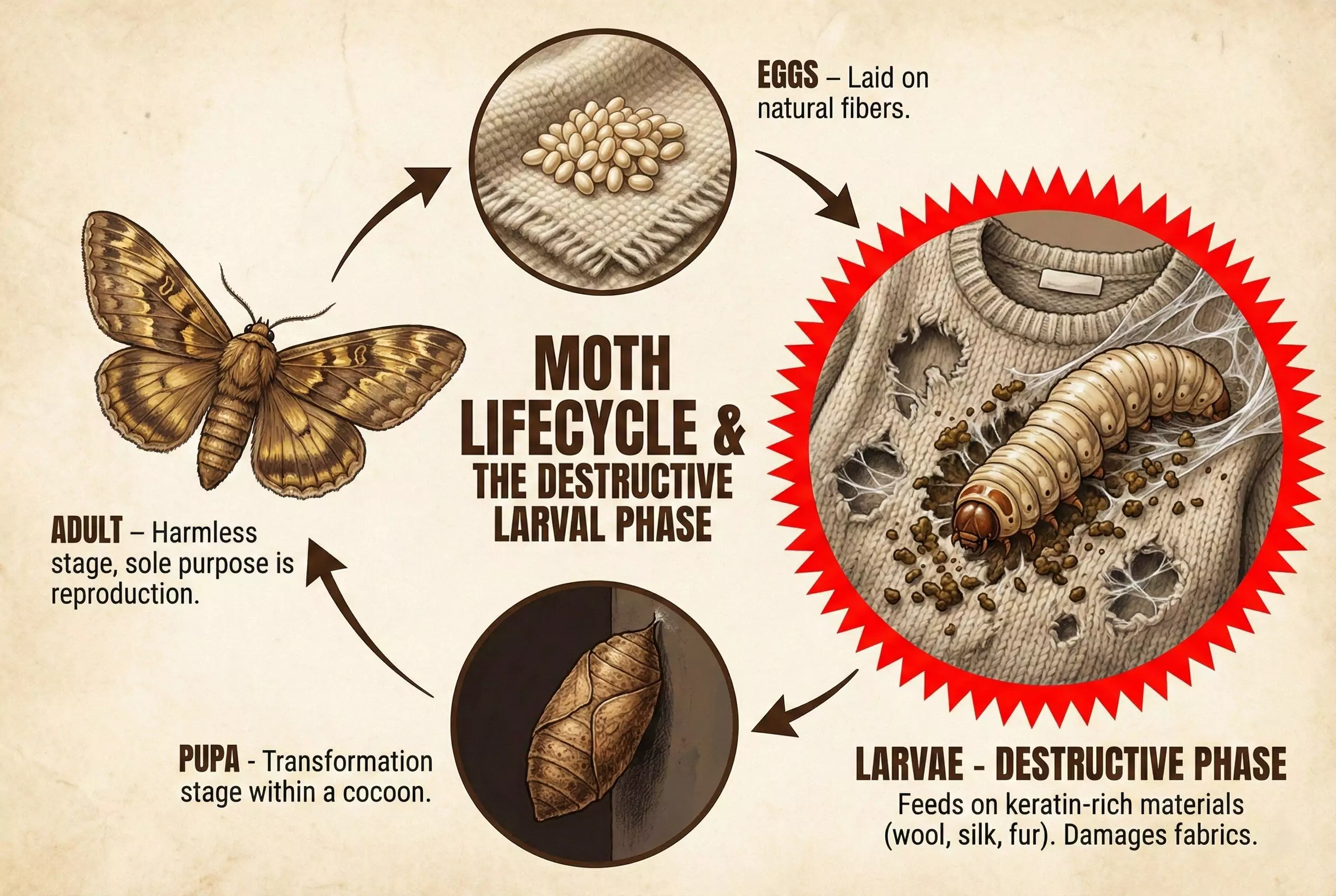
To stop the infestation, you must break the lifecycle.
- Eggs: Laid deep in the pile of the rug. They are microscopic and hard to see.
- Larvae: The destructive stage. They hatch and eat the wool fibres, creating holes and tunnels. This stage can last from two months to two years depending on the temperature.
- Pupae: The larvae spin a cocoon to transform into adults.
- Adults: Small, silvery-gold moths that fly (often poorly) and lay more eggs.
How to Spot a Moth Infestation
Detecting moths early can save your rug. Often, the damage is done in dark, undisturbed areas, such as under sofas or bookcases.
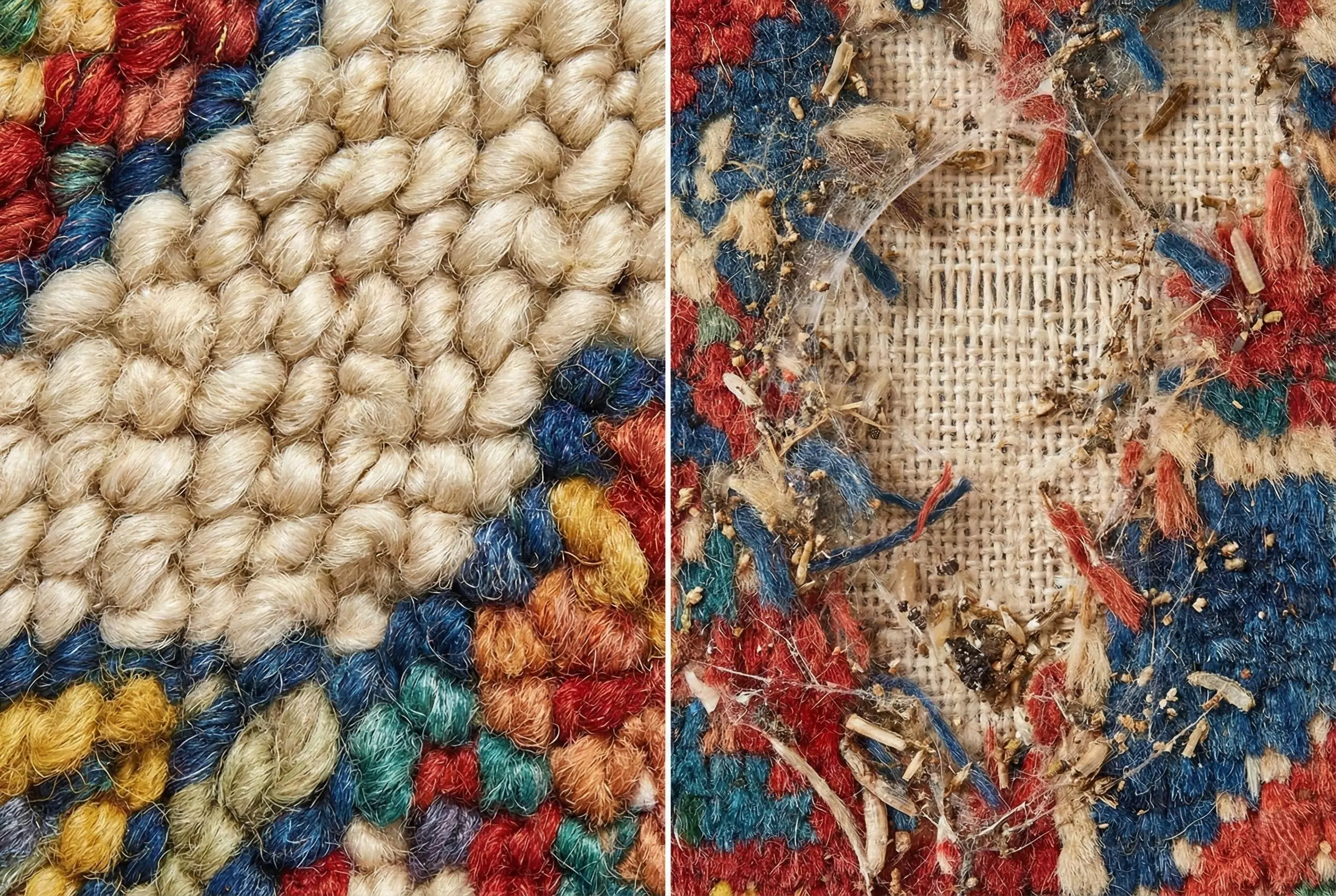
Common Signs of Activity
- Bald Patches: Look for areas where the pile has been eaten away, leaving only the backing foundation visible.
- Webbing: You might see sticky, white, cobweb-like material on the surface or underside of the rug.
- Larvae: Small, creamy-white caterpillars with brown heads, usually about half a centimetre long.
- Sand-like Particles: This is actually ‘frass’ (insect waste). It looks like fine sand but is the colour of the rug dye they have consumed.
- Casings: Small, tubular cases that the larvae drag around with them (specific to the Case-Bearing Moth).
Immediate Steps to Take (The Triage Phase)
If you confirm you have moths, do not panic, but do not wait. A female moth can lay hundreds of eggs at once.
1. Isolate the Rug
Move the affected rug away from other woollen items. If possible, take it outside. This stops the larvae from migrating to your curtains, clothes, or other carpets.
2. Inspect Surrounding Areas
Check the floorboards underneath the rug. Moths love to lay eggs in cracks in wooden floors or the edges of skirting boards. Vacuum these areas heavily.
3. Check Furniture
If the rug was under a sofa or heavy chair, check the furniture legs and underside. Moths can travel upwards into upholstery.
Comprehensive Treatment Methods
There are several ways to treat moths, ranging from home remedies to professional chemical applications. Here is a detailed breakdown of what works.
Method 1: The Vacuuming Strategy
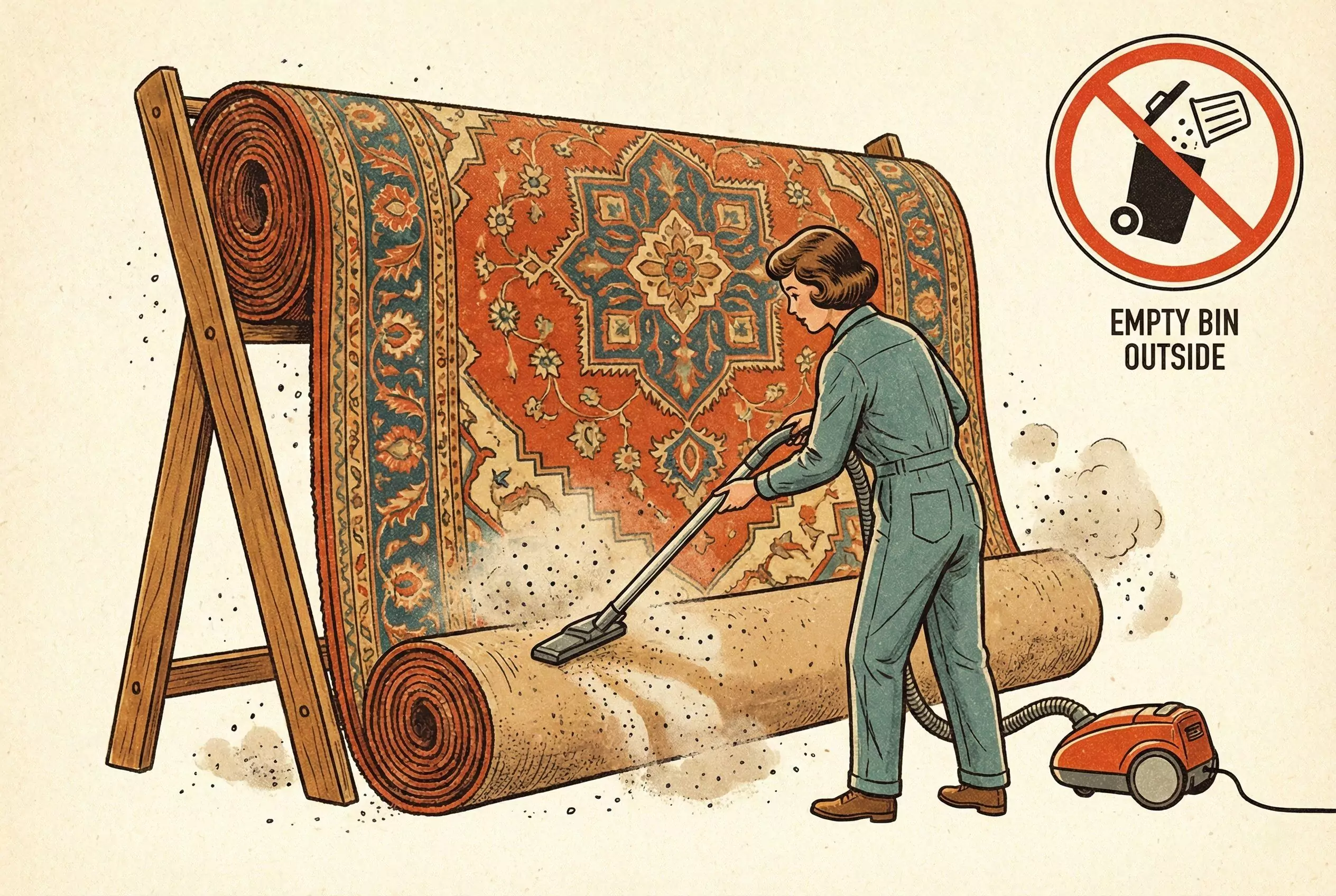
Vacuuming is your first line of defence. It physically removes adults, eggs, and larvae.
- Top Surface: Vacuum the rug slowly in multiple directions. Do not just go back and forth once; go over the same spot four or five times.
- The Underside: Flip the rug over. Moths often prefer the dark underside. Vacuum this just as thoroughly.
- The Floor: Vacuum the floor where the rug was sitting.
- Disposal: Immediately empty your vacuum cleaner. If it is bagless, empty it into an outside bin and wash the canister with hot soapy water. If it uses bags, throw the bag away immediately in an outside bin. If you leave the dust inside the vacuum, the eggs will hatch inside the machine.
Method 2: White Vinegar (The Natural Approach)
Vinegar is acidic and changes the pH level of the rug, making it inhospitable to moths. It cleans, but it is not a 100% guaranteed kill method for eggs deep in the pile unless combined with other steps.
- Mix: Create a solution of 50% white vinegar and 50% water.
- Test: Always patch test a small corner of the rug first to ensure the colours do not run.
- Apply: Spray the solution lightly over the front and back of the rug. Do not soak it, as too much moisture can cause rot or mould.
- Scrub: Use a soft brush to gently work the solution into the fibres.
- Dry: Allow the rug to dry completely in the sun if possible (sunlight also kills larvae).
Method 3: Heat Treatment (Steaming)
Heat is extremely effective. Moths and their eggs cannot survive temperatures above 50°C to 60°C.
- Steam Cleaner: Use a handheld steamer or a floor steamer.
- Application: Move slowly over the rug. The heat needs to penetrate through the wool to the backing.
- Caution: Be very careful with delicate antique rugs or silk rugs. High heat can shrink wool or cause dyes to bleed. If you are unsure, consult a professional.
Method 4: Freezing (The Cryogenic Method)
If you have a small rug or kilim, freezing is one of the safest ways to kill moths without chemicals.
- Bag it: Place the rug in a plastic bag and seal it tightly with tape.
- Freeze: Put it in a deep freezer for at least one week.
- Thaw: Take it out and let it come to room temperature while still in the bag (this prevents condensation from forming on the wool).
- Repeat: Some experts suggest freezing for a few days, thawing, and freezing again to ensure even the hardiest eggs are destroyed.
Method 5: Chemical Sprays (Insecticides)
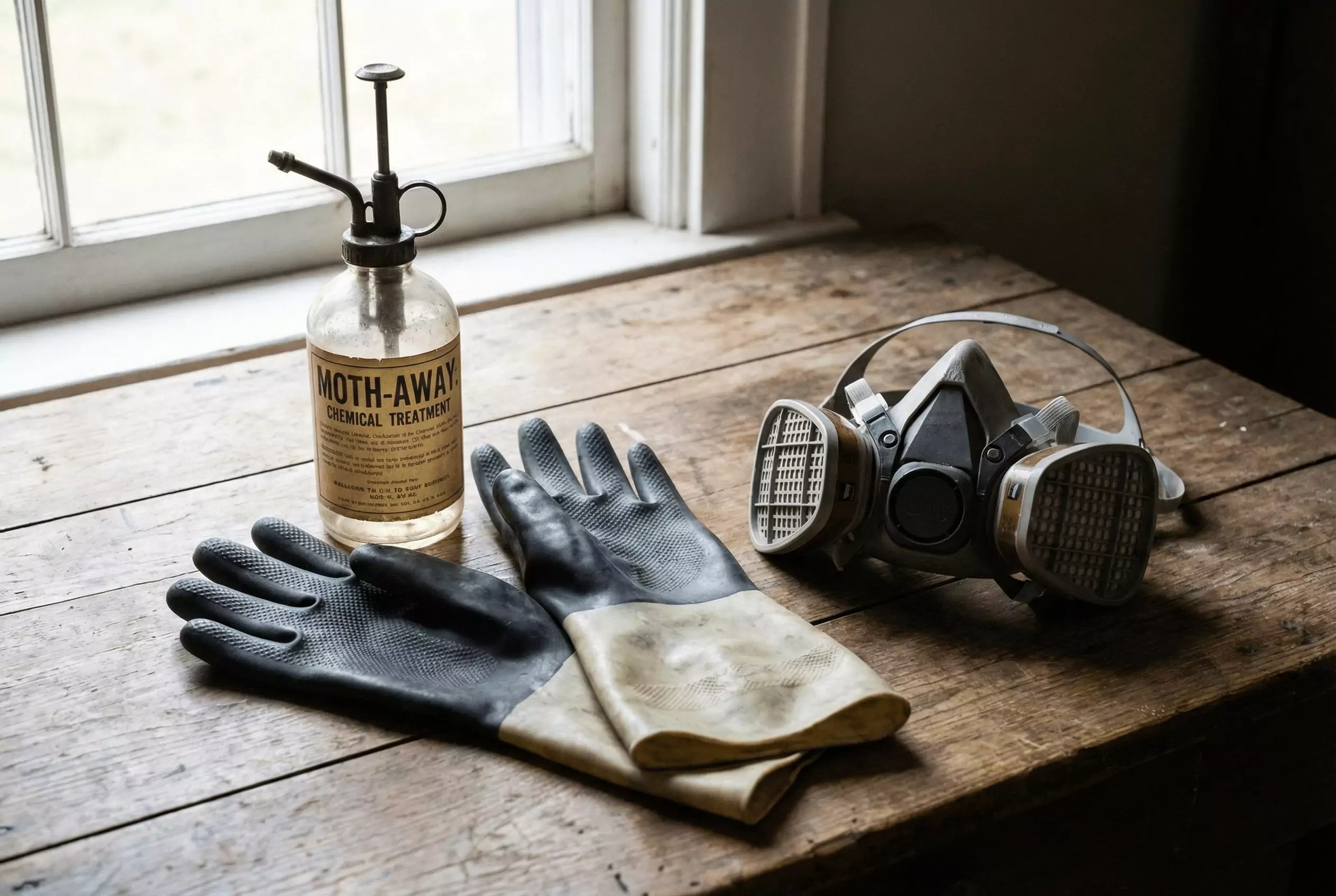
For heavy infestations, chemical intervention is often necessary. Look for sprays containing Permethrin or Pyrethrum.
- Safety First: These chemicals are potent. Wear a mask and gloves. Keep children and pets (especially cats, as Permethrin is toxic to them) away from the area until the rug is completely dry.
- Application: Spray the rug thoroughly on both sides. Focus on the edges and dark patches where damage occurred.
- Ventilation: Open all windows to ensure good airflow.
- Repeat: One treatment is rarely enough. The lifecycle of a moth means eggs might hatch later. Treat again after 14 days.
Professional Rug Cleaning vs DIY
Sometimes, a home treatment is not enough. If you have a large hand-knotted Persian rug or a valuable antique, DIY methods carry risks.
When to Call a Professional
- High Value: If the rug is worth thousands of pounds, do not risk ruining it with vinegar or heat.
- Severe Infestation: If the rug is falling apart or you see dozens of larvae, the infestation is deep inside the knots.
- Fragile Materials: Silk and rayon require specialist care.
What Professionals Do
Professionals have access to treatments you cannot replicate at home:
- Immersion Washing: They can fully submerge the rug in moth-repelling solutions that penetrate every fibre.
- Heat Chambers: Large ovens that heat the rug to a specific temperature to kill pests without damaging the wool.
- Deep Freezing: Industrial walk-in freezers for large carpets.
Repairing Moth Damage
Once the moths are dead, you are left with the damage. Can it be fixed?
Re-weaving
Professional restorers can re-weave the eaten areas. They match the wool type, colour, and knot density. This is expensive and time-consuming, usually reserved for sentimental or high-value pieces.
Colouring
If the moths have only grazed the surface (surface grazing) and eaten the top layer of coloured wool, leaving the white foundation knots, a restorer can sometimes paint or dye the exposed foundation to match the pattern. This disguises the damage rather than fixing it.
Patching
For less valuable rugs, a patch from a similar rug can be sewn in. This is less perfect but more affordable.
Long-Term Prevention Strategies
Treating the current infestation is only half the battle. You must prevent them from returning.
1. Regular Disturbance
Moths hate light and movement. They thrive in quiet, dark corners.
- Vacuum under sofas and heavy furniture at least once a month.
- Rotate your rugs every six months. This changes the lighting and footfall patterns, discouraging moths from settling in one spot.
2. Humidity Control
Moths prefer humid environments because the larvae need moisture to stay hydrated.
- Use a dehumidifier to keep indoor humidity below 50%.
- Ensure the room is well-ventilated.
3. Proper Storage
If you need to store a rug, never just roll it up and put it in the loft.
- Clean it first: Never store a dirty rug. Sweat and food residues attract moths.
- Wrap it: Roll the rug and wrap it in breathable Tyvek paper or a specific moth-proof plastic rug bag.
- Add Deterrents: Place cedar balls or lavender sachets inside the roll. Note that these do not kill moths; they only deter them slightly. They lose potency over time and must be refreshed or sanded down every few months.
4. Pheromone Traps
These are sticky traps laced with the female moth pheromone. They attract and trap the male moths.
- Monitoring tool: They are excellent for telling you if you have a problem. If you see moths in the trap, you know there is activity.
- Population control: They help reduce the mating cycle by removing males, but they will not eliminate an infestation on their own.
Natural Deterrents: Fact vs Fiction
There is a lot of advice about natural remedies. Here is what actually works.
Cedar Wood:
- The Claim: The smell drives moths away.
- The Reality: It works only if the cedar is fresh and the oil is potent. Old, dry cedar blocks do nothing. You must sand them regularly to release the scent.
Lavender:
- The Claim: Moths hate the smell of lavender.
- The Reality: Similar to cedar, it is a mild repellent. It will not stop a hungry larva from eating your rug, but it might discourage an adult from laying eggs there.
Dried Herbs (Cloves, Rosemary, Thyme):
- The Reality: These can be used in sachets. They offer mild protection but should not be relied upon as your only defence.
Safety Considerations for Pets and Children
When treating rugs, safety is paramount.
Permethrin and Cats
This is the most critical safety warning. Permethrin is highly toxic to cats. Their livers cannot break it down, and it causes fatal seizures.
- If you have cats, do not use Permethrin sprays.
- Use heat, freezing, or professional services instead.
- If you must use a spray, the rug must be treated in a garage or room the cat cannot access until it is 100% dry and aired out.
Children
Keep children away from wet insecticides. Once the rug is dry, it is generally considered safe, but check the bottle label for specific reentry intervals.
Frequently Asked Questions
Can moths eat synthetic rugs?
Generally, no. Moths need keratin (animal protein). However, if a synthetic rug is stained with food, urine, or has a lot of pet hair trapped in it, the larvae may chew through the synthetic fibres to get to the “food,” damaging the rug in the process.
How long does it take to get rid of moths?
It is rarely an overnight fix. The egg cycle means you might kill the adults today, but eggs could hatch in two weeks. Expect the process to take about one month of monitoring and re-treating to be fully clear.
Will the sun kill moths?
Yes. Direct, hot sunlight is a great disinfectant. It kills larvae and eggs if the exposure is long enough. However, strong sunlight can fade rug dyes, so limit exposure to a few hours and ensure it is a very sunny day.
Conclusion
Saving your rugs from moths requires patience and diligence. The key takeaway is to act fast. As soon as you see a moth or a hole, start the vacuuming and cleaning process. Do not rely on old wives’ tales like cedar balls to fix an active infestation; use heat, freezing, or proven insecticides.
Remember that rug maintenance is not just about cleaning stains; it is about inspecting for pests. By vacuuming under your furniture regularly and keeping an eye out for warning signs, you can protect your beautiful textiles for decades to come.
